The Future of Compression Molding Services in Sustainable Manufacturing
Understanding Compression Molding Services
Overview of Compression Molding Process
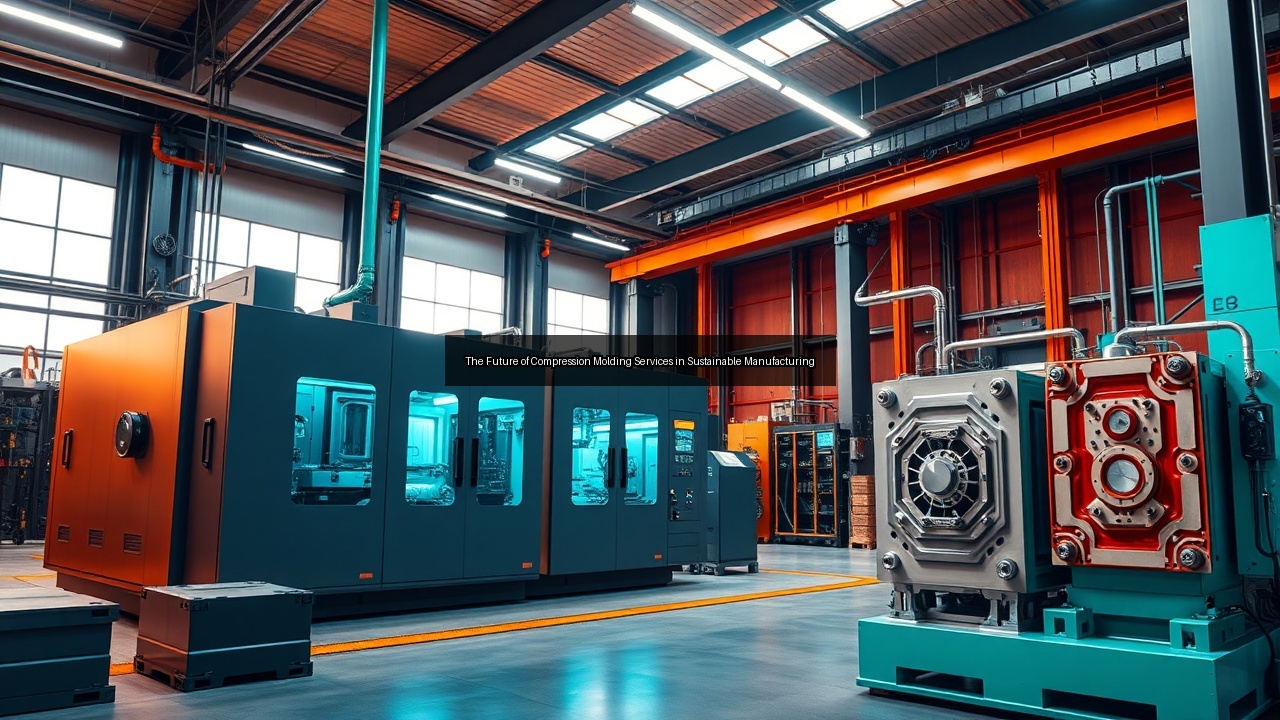
Compression molding services deliver precise components by placing a preheated polymer charge into an open mold cavity. Operators close the mold under high pressure, forcing the material to fill every contour before heat cures the part. This compression molding process suits thermoset resins and certain thermoplastics that require uniform density. Modern compression molding machines apply consistent force across large surface areas, producing parts with minimal internal stress. Technicians monitor temperature profiles and dwell times to achieve full cure without flash or voids. The resulting compression molded items exhibit excellent mechanical strength and surface finish. Companies that offer compression molding services often integrate robotic handling to load charges and eject finished parts, shortening cycle times. Designers specify wall thicknesses and draft angles early so the compression molding production runs smoothly from prototype to volume manufacturing.
Material preparation remains critical. Workers weigh charges to exact tolerances so excess material does not create flash that requires secondary trimming. Preheating the charge reduces viscosity and improves flow into intricate features. Once the mold reaches target temperature, the press closes at controlled speed to avoid trapping air. After cure, the mold opens and ejector pins release the part for inspection. This sequence repeats reliably across thousands of cycles when molds receive proper maintenance. Compression molding services therefore provide repeatable quality for applications demanding tight tolerances and structural integrity.
Key Differences Between Compression Molding and Injection Molding
Compression molding differs from plastic injection molding in material state and flow mechanics. Injection molding forces molten resin through a nozzle into a closed mold at very high velocity. Compression molding places a solid or viscous charge into an open mold, then applies pressure to shape it. This distinction allows compression molding processes to handle fiber-reinforced compounds without damaging the reinforcement. Injection molding excels at high-volume runs of small, complex parts, yet it struggles with very large or thick sections due to cooling challenges. Compression molding services handle large panels and structural parts efficiently because the material cures under heat and pressure rather than rapid cooling. Insert molding occurs more easily in compression setups since operators can place inserts before closing the mold. Tooling costs for compression molding often run lower than injection molds because cavities require fewer gates and runners. Manufacturers evaluate part geometry, production volume, and material type before selecting between these two methods.
Importance of Molds in Compression Molding
Molds determine final part quality in every compression molding service. Precision-machined steel or aluminum tools withstand repeated cycles of heat and pressure without distortion. Surface finishes on the mold transfer directly to the part, reducing post-processing needs. Proper venting prevents trapped gases that cause burn marks or weak spots. Temperature control channels maintain uniform heat so the entire charge cures at the same rate. Designers incorporate draft angles and radii into mold geometry to ease part release and extend tool life. When suppliers of compression molding services maintain molds with regular polishing and inspection, they avoid defects that halt production. High-quality molds also accommodate varying charge weights and fiber orientations, giving engineers flexibility during product development. Reliable molds therefore form the foundation of consistent, cost-effective compression molding production.
Sustainability in Compression Molding

Eco-friendly Materials Used in Compression Molding
Compression molding services increasingly adopt bio-based resins and recycled fiber reinforcements. Natural fiber composites such as flax or hemp replace glass in many structural applications while lowering carbon footprint. Thermoset resins derived from plant oils cure under the same pressure and temperature profiles as petroleum-based alternatives. Recycled content from post-industrial scrap integrates easily into compression molding processes because the material undergoes less shear than injection systems. These sustainable options maintain mechanical properties required for demanding environments. Material suppliers now certify bio-content percentages so manufacturers can document environmental claims. Compression molding companies that qualify these resins help clients meet regulatory targets without sacrificing performance or increasing scrap rates.
Reduction of Waste in Compression Molding Processes
Compression molding generates less waste than many competing methods. The process uses near-net-shape charges that leave minimal flash for trimming. Excess material can be ground and reintroduced into subsequent charges when the resin system permits. Unlike injection molding, compression molding produces no sprues or runners that become scrap. Closed-loop systems capture trim waste and return it to the mixer, cutting raw material consumption. Precision weighing stations ensure every charge matches part volume, eliminating overpacking. Waste reduction programs at compression molding services also include solvent recovery during mold cleaning and reuse of packaging materials. These practices lower disposal costs while supporting circular economy goals across supply chains.
Energy Efficiency in Compression Molding Services
Modern compression molding machines incorporate servo-driven presses that consume power only during active movement. Insulated platens retain heat and reduce the energy required to maintain cure temperatures. Variable-frequency drives on hydraulic systems match pump output to actual demand, cutting idle losses. Heat recovery units capture waste heat from curing cycles and preheat incoming charges. Facilities offering compression molding services audit energy use per part and optimize press settings to minimize kilowatt-hours. LED lighting and efficient HVAC systems further reduce the overall environmental impact of production floors. These combined measures allow manufacturers to deliver high-quality parts while lowering both operating costs and greenhouse gas emissions.
Applications of Compression Molding in Various Industries
Automotive Components Manufacturing
Automotive suppliers rely on compression molding services for body panels, underbody shields, and structural brackets. Compression molded parts deliver high strength-to-weight ratios that improve fuel efficiency. Glass-fiber reinforced thermosets withstand engine bay temperatures and road chemicals better than many thermoplastics. Large hood liners and trunk floors form in single press cycles, reducing assembly steps. Electric vehicle battery enclosures benefit from the process because thick sections cure uniformly without sink marks. Compression molding companies that serve this sector maintain IATF 16949 certification and validate parts through rigorous crash and vibration testing.
Consumer Goods and Household Items
Manufacturers produce durable consumer products through compression molding. Appliance housings, power tool cases, and furniture components gain impact resistance and attractive textures from the process. Compression molded dinnerware and storage containers resist staining and maintain dimensional stability through repeated dishwasher cycles. The ability to embed color and texture directly into the part eliminates secondary painting operations. Compression molding services also support low-volume runs for seasonal items because tooling changes cost less than injection molds. Designers appreciate the freedom to create thick, ergonomic grips without weld lines that appear in injection molded equivalents.
Medical Device Production
Medical device companies use compression molding services for trays, instrument handles, and implantable components. Biocompatible resins cure under controlled conditions that preserve material purity. The low-shear nature of compression molding protects sensitive additives such as radiopaque fillers. Sterilization compatibility remains high because cured parts contain few residual stresses. Compression molding suppliers maintain ISO 13485 quality systems and document traceability from raw resin to finished device. Cleanroom presses allow production of parts that require minimal particulate contamination before packaging.
Choosing the Right Compression Molding Company
Evaluating Reliability and Specifications
Selecting a compression molding company begins with a review of equipment tonnage, platen size, and temperature capabilities. Buyers request sample parts that match their specifications to verify dimensional accuracy and surface quality. Reliability metrics include on-time delivery rates and defect parts per million. Audits of process controls reveal whether the supplier maintains consistent pressure profiles and cure times across shifts. References from similar industries provide evidence that the compression molding services provider can scale from prototype to production volumes without quality drift.
Factors to Consider When Selecting Compression Molding Suppliers
Lead time, material expertise, and secondary operations influence supplier choice. Companies that offer in-house machining and assembly reduce logistics complexity. Geographic location affects shipping costs and response time for engineering changes. Pricing models should clarify setup charges, per-piece costs, and minimum order quantities. Compression molding suppliers that maintain broad material inventories shorten development schedules. Contract terms covering intellectual property and capacity reservations protect long-term programs. Thorough evaluation of these factors ensures the selected partner delivers both technical performance and commercial stability.
The Role of Technology in Compression Molding Services
Advanced sensors embedded in molds feed real-time data on pressure, temperature, and cavity fill to control systems. Machine learning algorithms adjust press parameters during production to compensate for material lot variations. Digital twins of molds simulate flow and cure before physical tooling is cut, shortening development cycles. Automated guided vehicles transport charges and finished parts, reducing manual handling. Compression molding services that invest in these technologies achieve higher yields and faster throughput. Integration with enterprise resource planning software provides customers with live production status and traceability records. Technology therefore drives continuous improvement in quality, cost, and sustainability for the entire compression molding industry.